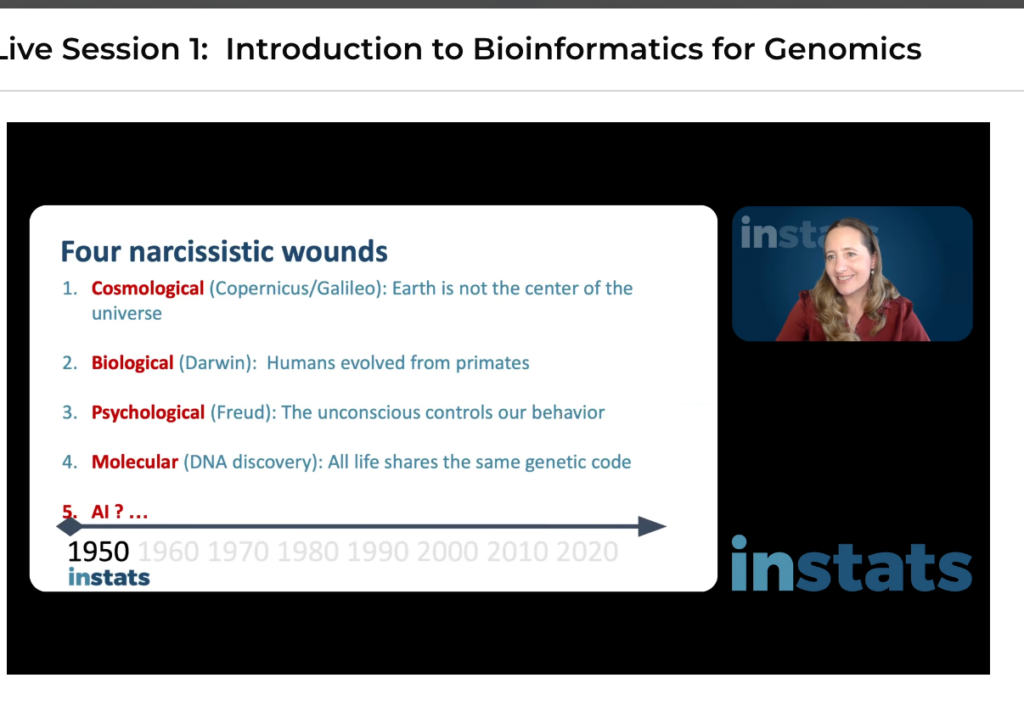
I couldn’t resist bringing this question into my first seminar on the instats platform, where I introduced key bioinformatics methods for analyzing sequencing and genomics data, celebrating 25 years since the first publication of the human genome sequence.
instats is a mission-driven organization devoted to improving multidisciplinary research practices globally and I’m proud to be part of their community.
For those who missed it, the seminar is free and available online
And as always say: the more you share what you know, the more you realize how much more there is to learn.